
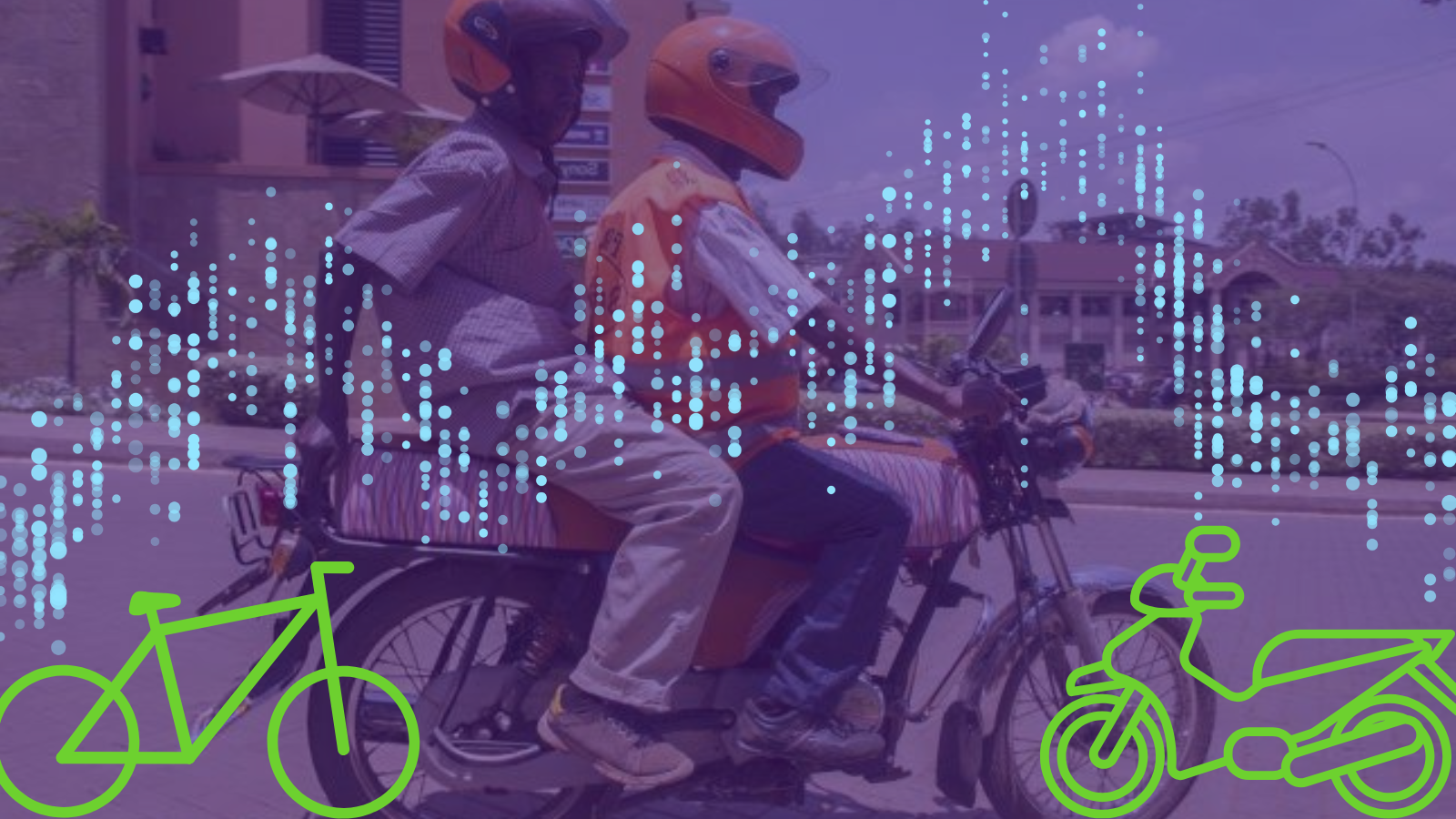

Imagine describing access to government data as a ‘boda boda’ (public transportation) ride.
That exercise kicked off “Sandboxing the future: experimentation for inclusive data systems,” a session organized by the Datasphere Initiative and GPSDD at the Global Data Festival in Nairobi. This 90-minute co-creation lab convened policymakers, civil society, and researchers to examine operational sandboxes as controlled, collaborative environments for testing technical standards, governance frameworks, and data access agreements.
The answers were both humorous and telling.
These reflections pointed to a deeper reality. The challenge isn’t that data doesn’t exist. Across the continent, vast amounts of administrative, statistical, geospatial, mobile, citizen-generated, and private-sector data already exist. Yet these datasets often remain fragmented across institutions, sectors, and levels of government, limiting their ability to inform decision-making, improve services, and drive innovation.
Lack of trust remains the primary barrier to data sharing
To ground the discussion, participants were asked to identify the single biggest barrier to data sharing in their sector or country today. Three key challenges emerged: interoperability across systems, trust between institutions, and data quality and access.
Participants shared examples that brought these challenges into sharp focus: Kenya’s public finance data is theoretically available, but much of it remains inaccessible for analysis or reuse because it isn’t published in machine-readable formats. Additionally, the country’s devolved governance structures mean counties often adopt differing approaches to the data’s management.
Another example centred on the country’s e-Citizen platform and the broader ecosystem of digital public services. Although multiple government agencies are hosted on a common platform, information frequently remains siloed. Participants questioned why citizens continue to provide information that government systems may already possess. For example, birth registration systems may already contain family information that could support later services such as national identification registration, yet these systems often do not seamlessly communicate with one another.
Other examples drew from countries such as Uganda and Malawi where during COVID-19, health data was linked with census information to identify vulnerable populations and guide emergency response, but efforts to sustain that access for broader public benefit stalled over unresolved questions of governance, safeguards, and accountability.
The data existed. The trusted mechanisms to share it did not.
Notably, trust received the highest number of responses when participants were asked what they perceive is the single biggest barrier to data sharing in their sector or country, underscoring a critical insight from the session: while technical and structural barriers remain significant, it is the absence of trust that most strongly constrains effective data sharing.
Transitioning from open data to connected data ecosystems
These findings speak to a keynote delivered by Victor Ohuruogu, Africa Regional Lead at the Global Partnership for Sustainable Development Data (GPSDD), who offered five key insights for Africa’s data future. Africa’s challenge, he argued, is not a lack of data, but a lack of connectivity between data sources and institutions.
Interoperability, he therefore emphasized, is the foundation of modern data ecosystems and the means by which greater value can be unlocked from existing data assets. Ohuruogu stated that trust, however, cannot be assumed; it must be intentionally designed into data systems through privacy, transparency, ethics, and accountability. To underpin all of it, he concluded, inclusion must remain at the centre of data innovation, to ensure that women, youth, persons with disabilities, and marginalized communities benefit from, rather than are bypassed by, data-driven development.
The conversation that followed reinforced a central message: the challenge is no longer simply opening datasets. It is creating trusted mechanisms that allow data to move across systems, institutions, and sectors in ways that generate meaningful public value and improve people’s lives.
We thus sought to explore how operational sandboxes could offer a practical pathway for addressing these challenges through experimentation, collaboration, and evidence-based learning. Operational sandboxes are environments that provide access to data, software or infrastructure to enable the testing, validation, and improvement of standards or technical aspects of products, services, or processes (e.g., feasibility, scalability, interoperability, efficiency, or functionality), under real or simulated conditions.
In this context, sandboxes provide practical environments to test governance models, technologies, and partnerships before scaling them. Two examples illustrate this well. The Ecobank Pan African Sandbox gives innovators and FinTechs secure access to Ecobank’s APIs to develop and test digital financial services, fostering collaboration without the risks of a live environment. The Europeana Metis Sandbox allows cultural heritage institutions to validate and refine metadata before it is integrated into the Europeana platform, replacing slow manual quality checks with faster, automated feedback. Both examples show how sandboxes can accelerate innovation, improve data quality, and embed good practice into broader digital systems from the ground up.
Participants similarly explored how operational sandboxes could help navigate new approaches to citizen-centred data access, by creating structured environments to test how different systems interface, negotiate data access agreements, and resolve the hard questions often left buried in fine print: who can access data? under what conditions? for what purposes? with what safeguards? This includes issues of remote access, oversight mechanisms, accountability measures, and the exceptions that shape how data-sharing arrangements work in practice.
The conversation also raised an important question worth further exploration: whether representative datasets might sometimes be sufficient, particularly given computational and infrastructure constraints across many African contexts. This shifted thinking from “more data” to “fit-for-purpose data,” and participants noted that sandboxes could be a valuable mechanism to explore this in specific sectors, particularly those working with sensitive datasets, helping identify the minimum data necessary to generate meaningful insights while maintaining appropriate safeguards.
Using data ecosystems to improve lives and outcomes
Effective data governance is not simply about datasets, technologies, or compliance frameworks, but it is also about enabling better decisions, better services, and better outcomes for people.
The session concluded with a broader call to action: Governments, National Statistical Offices, ministries, development partners, academia, civil society, and the private sector all have a role to play in moving from isolated data projects to trusted national data ecosystems. Achieving this will require investment in governance, interoperability, capacity, and experimentation; and the trust necessary for responsible data sharing and collaboration.
Africa’s next leap forward will not be driven by data alone. It will be driven by our ability to connect data, build trust, generate insights, and turn evidence into action.
Continue the conversation with us
Building inclusive and trusted data ecosystems is an ongoing global effort. Explore the Global Sandboxes Forum to connect with practitioners designing experimental governance frameworks worldwide, or contact the Datasphere Initiative team to collaborate on future policy labs and workshops.