
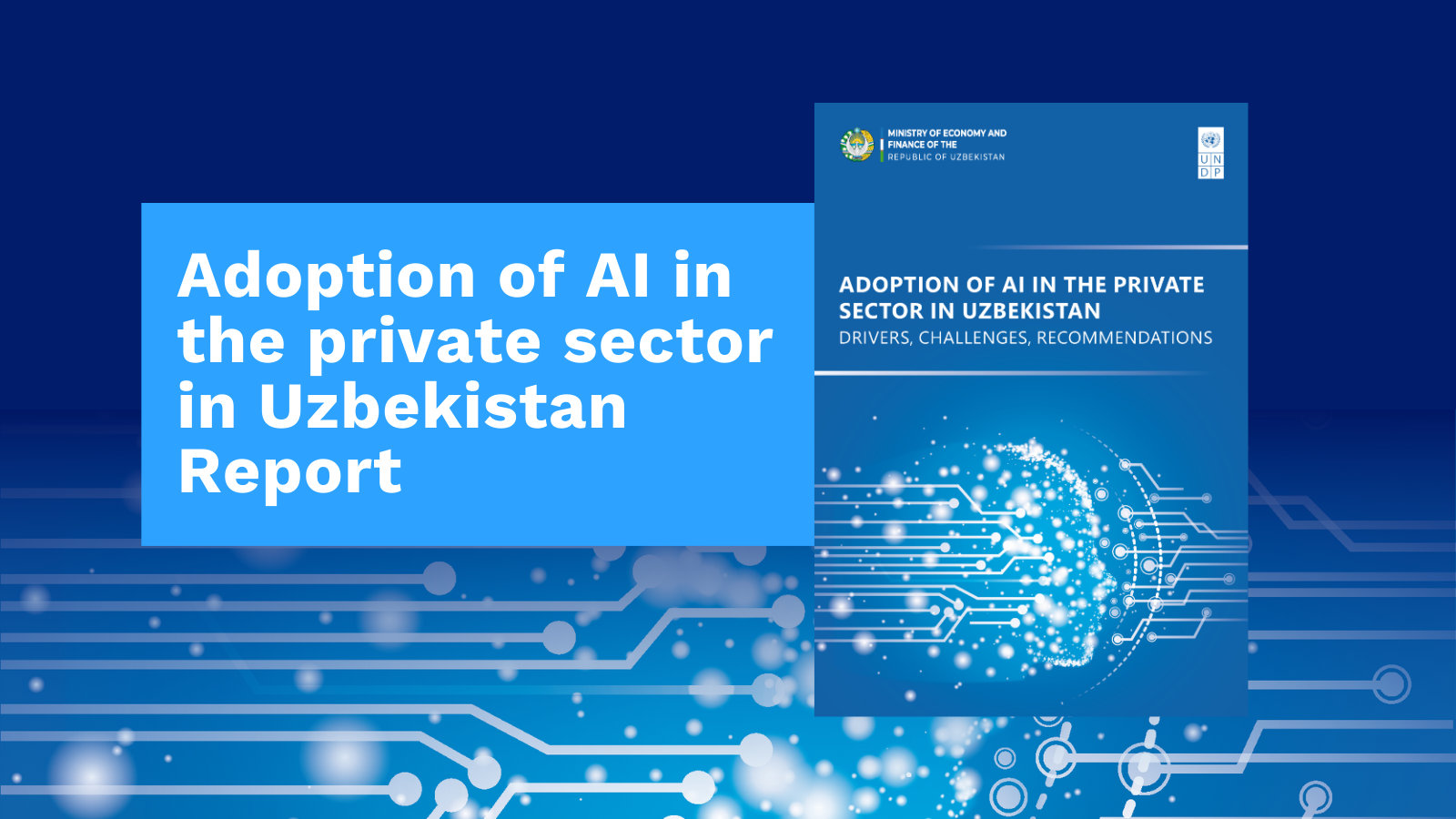

A new joint report explores how AI regulatory sandboxes can provide a controlled environment to support Micro, Small, and Medium Enterprises (MSMEs) in safely adopting AI technologies.
The United Nations Development Program (UNPD) in Uzbekistan, in a joint effort with StratejAI, and the Datasphere Initiative, has released a new report on the state of AI development in the country. The publication maps practical pathways for responsible AI development in Uzbekistan’s economy, focusing heavily on the implementation of AI sandboxes.
Sandboxes are isolated, secure, and controlled environments built to test, develop, and validate artificial intelligence models, applications, or regulatory approaches. They simulate real-world conditions, allowing businesses to innovate without risking production systems, data, or violating legal requirements.
In the document, the Datasphere Initiative contributed its global sandbox design methodology and comparative research to highlight how sandboxes can be the next step to accelerate responsible AI adoption for the country’s economic development.
Uzbekistan as a hub of AI investment opportunities in Central Asia
Uzbekistan is rapidly setting its sights on becoming a strategic AI investment opportunity in Central Asia. The country recently released a National Strategy for the Development of Artificial Intelligence Technologies until 2030, choosing AI as a stimulus for economic diversification, ensuring that businesses of all sizes can benefit from digital transformation. This strategy explicitly identifies priority sectors for AI integration, including healthcare, finance and banking, agriculture, and energy.
The efforts are already translating into results: Uzbekistan has become the fastest-rising startup hub in Central Asia. In 2020, early-stage funding in the country amounted to $0.3 million; by 2024, this number surged up to $69.5 million.
In Uzbekistan, 57.9% of surveyed businesses reported that they have integrated AI into their operations. However, many companies face significant challenges. The main policy paper diagnoses four core groups of barriers preventing Micro, Small, and Medium Enterprises (MSMEs) AI adoption: Financial (limited access to capital), Infrastructural/Technical (high computing costs), Human Capital (talent shortages), and Data Governance/Regulatory (fragmented regulatory support).
To reach the country’s aspiring objectives and accelerate responsible AI adoption, AI sandboxes can provide a controlled environment to address these issues, helping especially Uzbek smaller businesses to grow with consistency and regulatory security.
Supporting MSMEs: The backbone of AI transformation
MSMEs are the undisputed backbone of Uzbekistan’s economy, representing approximately 92% of all enterprises and employing around 75% of the national workforce. Because of this massive footprint, the success of the National AI Strategy relies heavily on the ability of these smaller companies to adopt and scale new technologies. Local MSMEs are already driving impact, such as agritech startups Fermerly and Growz, which use AI to provide real-time crop and pest diagnostics to smallholder farmers.
However, building AI requires massive upfront investments in high-performance computing and complex datasets, which often prices smaller startups out of the market. This is where AI sandboxes make a transformative impact. Beyond just relaxing rules, a hybrid AI sandbox can provide MSMEs with subsidized access to shared technical infrastructure, cloud resources, and secure data pools.
Furthermore, sandboxes act as a “compliance rehearsal” for smaller tech firms. By testing their products under regulatory supervision, MSMEs can build a documented track record of safety, privacy, and accuracy. This newly built trust is crucial for bridging the funding gap, allowing AI founders to confidently present their solutions to venture capital investors and secure contracts with large anchor clients, such as banks and hospitals.
Uzbek’s AI Sandboxes: sharing knowledge for success
The report analyses past experiences and best practices from existing sandbox initiatives in Uzbekistan, mostly not related to AI, to identify relevant lessons and needs. While Uzbekistan already operates a general regulatory sandbox under Cabinet of Ministers Resolution No. 617, stakeholders emphasized that a tailored, AI-specific sandbox is urgently needed to address unique challenges such as safe data access, algorithmic accountability, and model evaluation.
Operational, hybrid, or AI regulatory sandboxes can sponsor innovations aligned with strong consumer protections and international regulatory best practices. The report showed that such an initiative has the potential to shape new regulatory modernization paths, strike a balance between consumer protection, and encourage innovation, ultimately helping businesses of all sizes.
This would be an opportunity for Uzbekistan’s businesses to safely develop new applications of AI and improve planning, contributing to the country’s economic development as a whole. AI sandboxes are becoming one of the strategies for other Asian countries to drive responsible technological innovation and data governance.
Read the full report on Uzbekistan’s businesses adoption of AI and the Sandbox framework guide for more insights on the matter.
About the Project and Partners
This report was prepared within the framework of the UNDP project “Empowering the Youth to Embrace the Digital Economy and Digital Entrepreneurship,” designed to serve as an impactful tool for Uzbekistan’s business development, competitiveness, and innovation.
Empowering the Youth to Embrace the Digital Economy and Digital Entrepreneurship is a joint project of the Ministry of Economic Development and Poverty Reduction (MEDPR) of the Republic of Uzbekistan and UNDP in Uzbekistan that aims at enhancing the digital entrepreneurship environment and digital skills of young entrepreneurs.
StratejAI is a strategic consulting firm specialized in artificial intelligence to transform organizations and society with the power of data and AI.
More on Sandboxes
To learn more about sandboxes and how they’re helping businesses and countries across the world, please consider reading our blog posts below: